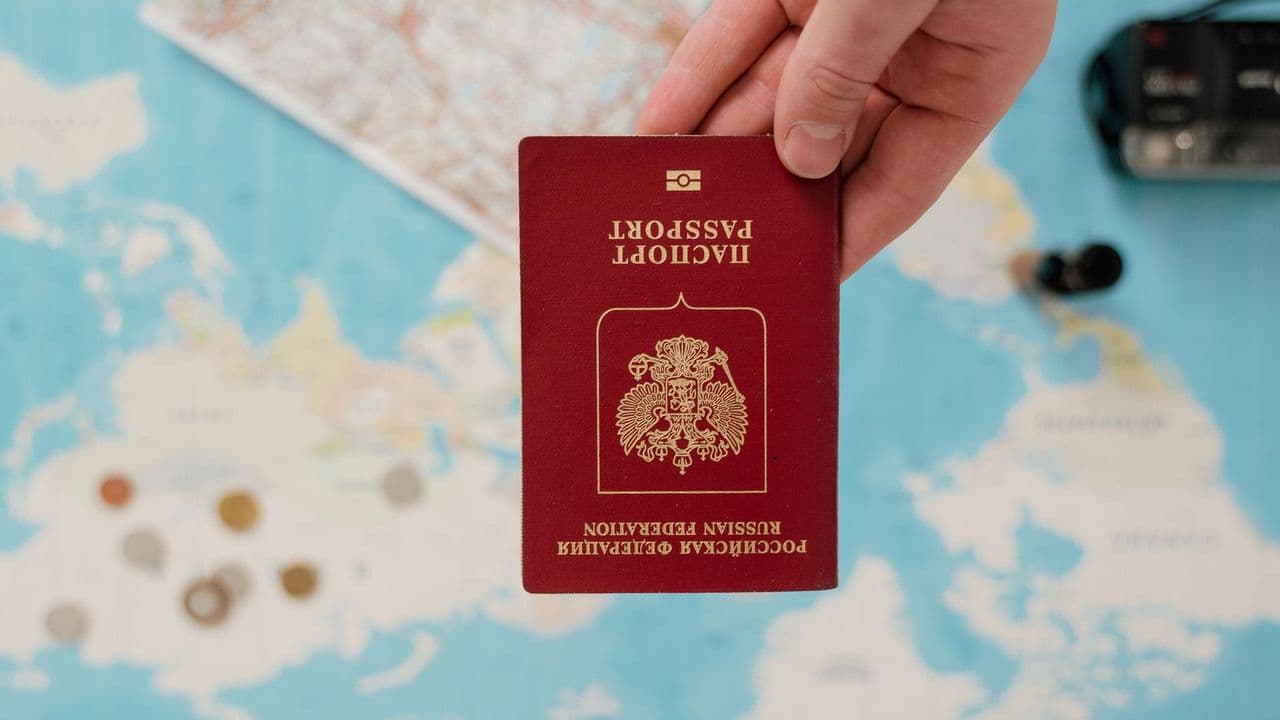
Migrationsverket's route menu for coming to work in Sweden has four categories. They are "Employee or self-employed," "Temporary work in Sweden," "Look for work," and "Certain people may work in Sweden without a work permit". None of them is a digital nomad visa. Anyone planning to work remotely from Sweden has to fit one of these four routes instead. Which one applies depends on nationality, employment type, and planned length of stay.
Sweden Offers No Digital Nomad Visa
Migrationsverket's own list of work routes does not include remote work or digital nomads as a category. The four options on the list are built around an employer, a job search, a business, or a narrow exception. None of them describes someone earning a salary from a foreign company while living in Sweden. That is the gap the four routes below close.
Route 1: Visitor Stays, With Work Allowed Only in Exceptional Cases
A Schengen visit allows you to stay up to 90 days within any 180-day period, per Migrationsverket. Migrationsverket directs travelers to the EU's Short-Stay Visa Calculator to track that window. Working during this stay is restricted, not open. Migrationsverket states that working without a permit on an entry visa is allowed "only in exceptional cases."
A residence permit for stays over 90 days does not change this. Migrationsverket states that this permit "does not give you the right to work or settle in Sweden". It only extends how long you can stay as a visitor.
Route 2: Work Permit Through a Swedish Employer, Decided Within Four Months
If a Swedish employer sponsors you, you can apply for a work permit as a non-EU or non-EEA hire. From 16 June 2026, the minimum salary is SEK 34,470 a month, equal to 90 percent of the national median wage, according to Migrationsverket. The application fee for an employee is SEK 2,200.
Migrationsverket states that no cases should take longer than four months to process. If you qualify as a highly qualified worker, your employer receives a decision within 30 days, according to Migrationsverket's guidance for employers. If you run your own business rather than draw a salary, this route does not apply; the self-employment route below does instead.
A faster standard may be coming. Fragomen, an immigration-law firm, reports a proposal to cut standard processing to 90 days from 1 February 2027. Fragomen notes that the government must still review the proposal, and parliament must still pass the law. Treat the shorter timeline as pending, not confirmed.
If you are comparing this route against a job search, read the Finding Work section too, since a sponsoring employer has to exist first.
Route 3: Self-Employment Permit, Two Years
This route is for you if you run your own business rather than work for an employer. It is a residence permit, not a visa. Migrationsverket requires that "you must be the one running the business and own at least 51 percent of it". Your application must also include a "[C]ertificate of incorporation for your business in Sweden". A remote consultancy serving only foreign clients does not clearly qualify unless the business itself is incorporated in Sweden.
You need at least SEK 200,000 in a bank account in your own name, according to Migrationsverket. You also need SEK 100,000 for an accompanying spouse and SEK 50,000 per accompanying child. The application fee is SEK 2,000 for you as the self-employed applicant, SEK 1,500 for an accompanying adult, and SEK 750 per accompanying child.
A permit granted under this route runs for a maximum of two years. It never runs longer than your passport stays valid.
Route 4: EU/EEA Citizens, No Visa Required
If you are a citizen of the EU, the EEA, or Switzerland, none of the routes above applies to you. Migrationsverket states that you have "the right to work, run your own business, study or live in Sweden without a residence permit."
Registration with Migrationsverket for EU/EEA citizens was abolished in 2014. A government text, SOU 2026:9, proposes bringing registration back. It states: "denna lag träder i kraft den 1 januari 2027" (this law enters into force on 1 January 2027). If the law passes and you are already in Sweden, you must register by 1 July 2027. The same text states: "EES-medborgare som redan vistas i Sverige vid ikraftträdandet ska ansöka om registrering senast den 1 juli 2027". As of August 2026, this requirement is not yet in force, and no registration is required.
If you plan to stay in Sweden for at least a year, apply for folkbokföring — the population register Skatteverket enters you into once you live here long-term. Skatteverket recommends this for anyone moving to Sweden to stay, and states that such residents should "in most cases be registered in the population register."
Tax Residency: About Six Months Triggers Swedish Income Tax
None of the four routes above sets when your Swedish tax residency starts; that runs on its own clock. Skatteverket states that you "count as staying regularly in Sweden" once you have spent "six consecutive months or more" in the country.
Short trips home do not reset this clock. Skatteverket states that "short-term departures, such as to visit your native country, do not shorten the duration of your stay in Sweden". Once you count as staying regularly, Skatteverket applies "unlimited taxation in Sweden" to all forms of your income, not only income earned inside the country.
Which Route Applies to You?
Nationality, employment type, and planned length of stay decide the route.
- You are an EU or EEA citizen: no visa is required, and no Migrationsverket registration is required today. A proposal under SOU 2026:9 would add registration from 1 January 2027, with a 1 July 2027 deadline for people already in Sweden.
- You are not EU/EEA and are staying under 90 days: a tourist or visitor stay applies. Migrationsverket allows work without a permit "only in exceptional cases."
- You are not EU/EEA, staying 90 days or more, and employed by a Swedish company: the work permit route applies. Migrationsverket states no cases should take longer than four months to process.
- You are not EU/EEA, staying 90 days or more, and self-employed or running a business: the self-employment route applies. It requires owning at least 51 percent of a business incorporated in Sweden.
- You are staying roughly six months or more: plan for Swedish tax residency once the six-month threshold is reached.
Frequently Asked Questions
Can you work remotely in Sweden on a tourist visa?
Migrationsverket allows work on an entry visa without a permit "only in exceptional cases". A visitor's residence permit for stays over 90 days "does not give you the right to work or settle in Sweden."
What is the fastest way to get a Swedish work permit?
If you qualify as a highly qualified worker, your employer can receive a decision within 30 days, according to Migrationsverket. Standard applications take longer; Migrationsverket states no cases should take longer than four months.
Do you need a visa to work in Sweden as an EU citizen?
No. Migrationsverket states that EU/EEA citizens have "the right to work, run your own business, study or live in Sweden without a residence permit". No registration is required today, though a proposal would add one from 1 January 2027.
No Nomad Visa Means Choosing One of Four Routes
Sweden has no digital nomad visa; the four routes above are what actually exist.
- A tourist or visitor stay covers short trips of up to 90 days; Migrationsverket allows work without a permit "only in exceptional cases."
- The work permit route can take up to four months to process; the self-employment route grants a permit valid for a maximum of two years.
- EU and EEA citizens skip the visa entirely, and no registration is required today. A proposal would add registration from 1 January 2027, with a 1 July 2027 deadline for existing residents.
- Tax planning should start around six months of continuous stay, when Swedish tax residency generally begins.
For the steps that come before any of these routes, see the Permits section. Anyone already living in Sweden and sorting out employment rules should also read Work Rights & A-kassa.