The information here is for general informational purposes only and does not constitute legal, financial, or tax advice. Always consult a qualified professional for your specific situation.
Keerthi Murugesan writes Sweden Unpacked, drawing on his own move from India through the permit, personnummer queue, and BankID process, and covers what the settling-in months are actually like.
Culture shock runs through four recognized stages: honeymoon, negotiation, adjustment, and adaptation. The negotiation stage, the one that feels like homesickness, usually lands around month three (now-health.com).
You probably braced for the first weeks to be the hardest part: unfamiliar paperwork, a new language, errands that took longer than they should. Then those weeks passed. Routines started to form. Something worse can still arrive a few months later, right when the adjustment seemed to be settling in.
This guide covers why month three feels this way, why Sweden layers a second, separate cause on top if you arrived in autumn, and what has sourced support for helping.
The Three-Month Pattern Is Not Specific to Sweden
The timing behind month three is psychological, not local. The negotiation stage of culture shock arrives around three months into almost any relocation, wherever you go (now-health.com).
Four stages make up this pattern. First comes the honeymoon stage, often lasting several weeks or months, while everything still feels new. Next comes the negotiation stage, usually around month three. Frustration and anxiety set in. Homesickness surfaces, and life back home starts to look better than it did on the way out. Physical symptoms, including insomnia and stomach upset, can layer on top of the emotional strain. The adjustment stage follows, typically between six and twelve months, as your routine returns. The adaptation stage, longer still, is where the new place starts to feel like home rather than somewhere you are enduring.
Do not treat month three as a fixed deadline. The negotiation stage can start earlier for you, depending on the move, your personality, and the support already in place on arrival. What matters is recognizing the pattern rather than the calendar date. Feeling worse a few months in, after things had started to feel manageable, is a known stage, not a sign the move was a mistake.
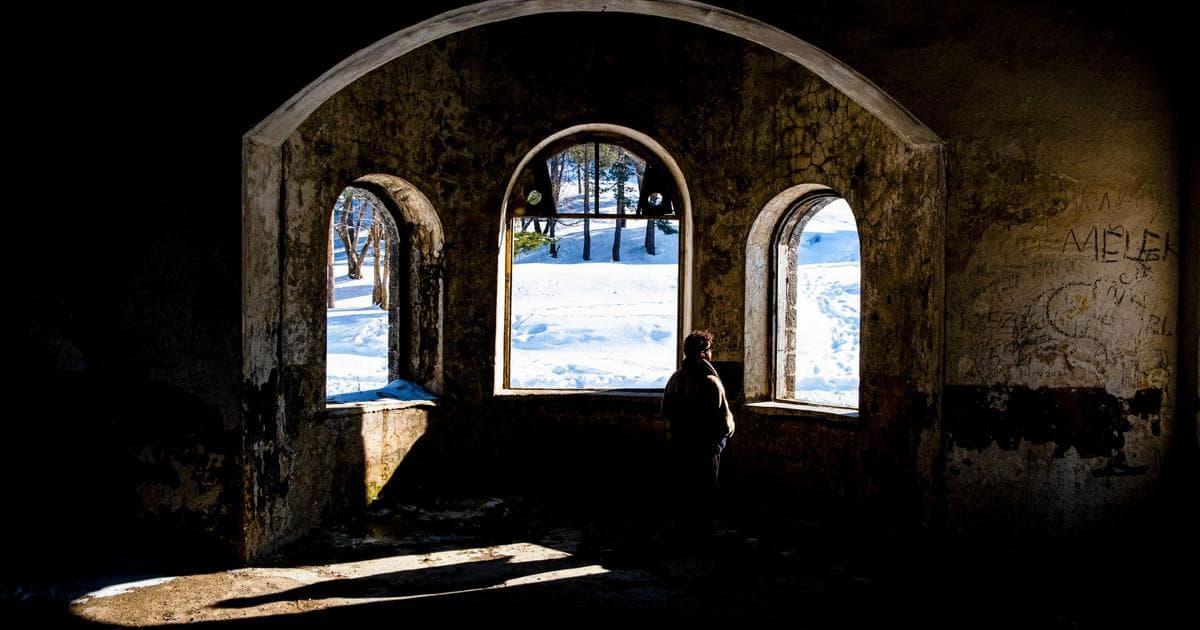
Photo by Adem Albayrak on Pexels
Why Sweden Adds a Second Cause, If You Arrived in Autumn
If you moved to Sweden in September or October, month three lands close to December. The ordinary psychological low point overlaps the year's darkest weeks. This is a calendar effect layered on the psychological one, and the two are worth telling apart.
Stockholm's daylight swings dramatically because of its high northern latitude, close to 59 degrees. Around the winter solstice, the sun rises at 08:43 and sets at 14:48, leaving 6 hours 5 minutes of daylight in total. The June solstice brings 18 hours 37 minutes instead (US Naval Observatory). How many daylight hours Stockholm gets across the year covers the darkness itself in full.
An autumn arrival is the specific case where these two causes overlap. If you arrived in spring or summer instead, you reach month three during a lighter, longer-daylight stretch, so the negotiation stage lands without this second cause layered on top. The psychological timeline is described as roughly fixed regardless of arrival season, but no source tested it directly against Sweden's light calendar, so treat that combination as a reasonable inference, not a confirmed finding.
Psychological cause
Calendar cause
What it is
The negotiation stage of culture shock
Sweden's short winter daylight
Who it affects
Almost anyone who relocates
Autumn arrivals specifically
When it eases
Gradually, over roughly 6-12 months, as routine forms
With the season, as daylight returns toward February
What helps
Routine, local contact, language, staying in touch
Nothing shortens it; only the calendar does
Telling the two apart matters more than treating them as one problem. One eases with time and routine. The other eases with daylight, on its own schedule.
Why Making Local Friends Takes Longer in Sweden Specifically
The friendship gap you feel around month three is not only a feeling. Sweden measurably ranks low on ease of making local friends, in survey data collected specifically on this question.
The 2023 InterNations Expat Insider survey ranked Sweden 46th of 53 destinations for Ease of Settling In, and 44th for both Local Friendliness and Finding Friends. Sixty-two percent of respondents in Sweden reported difficulty making local friends, against a 36 percent global average. Those are InterNations' own numbers, reached by polling its members rather than by official statistics, and this guide takes them from The Local's reporting (thelocal.se, 2023). The same survey has reported a similar pattern across multiple years. That points to a structural feature, not a single bad year of data.
The Isolation Risk Is Measurable, Not Just a Feeling
If you are a foreign-born resident, you are roughly twice as likely as a native-born resident to report going without a close confidant. This is population-level, government-sourced data, not an impression drawn from any single account.
Statistics Sweden puts it plainly: "Det är mer än dubbelt så vanligt att utrikesfödda personer saknar en nära vän än inrikesfödda. Det rör sig om 13 respektive 6 procent i de grupperna" (SCB). That is 13 percent of foreign-born residents against 6 percent of native-born, from the 2023 Undersökningarna av levnadsförhållanden survey of residents aged 16 and over. SCB adds that among the foreign-born it is men who more often go without; Norran, reporting the same data, puts that at over 15 percent of men against almost 11 percent of women.
This describes a population-level pattern, not a prediction for you specifically. It is a reason to act early on building local contact rather than assuming the feeling will pass on its own once enough time goes by.
What Has Sourced Support for Helping
A steady routine, deliberate local contact, and early language effort are the responses that show up consistently across sourced guidance, alongside staying in touch with people back home.
Keep a familiar routine: a regular exercise habit, a regular grocery run. It gives your day a shape that does not depend on the new place feeling settled yet. Sourced guidance frames this as balancing new experiences with familiar ones for a sense of stability, rather than replacing every old habit with a Swedish one at once (isoa.org). Make a deliberate effort to build a network too, rather than waiting for contact to happen on its own; the same guidance names this directly as a way to reduce isolation.
Start language learning early. It builds practical confidence for daily tasks, and it opens direct contact with locals that stays closed without it. Stay in touch with people back home too, rather than cutting contact to force a faster adjustment. That keeps a sense of continuity running underneath your new routine.
None of this removes the darkness-calendar effect covered earlier, which is separate and time-limited by the season. It eases on its own as daylight returns, not by effort. What a-kassa and workplace protections cover while you settle in is a separate, practical layer worth having in place during this stretch too.
Frequently Asked Questions
How long does homesickness normally last after a move abroad?
The acute negotiation-stage symptoms typically ease within roughly six to twelve months as routines form, though the exact timeline varies by person (now-health.com).
Why does month three feel worse than the first weeks?
The initial honeymoon excitement of a new place wears off, and the negotiation stage that follows brings frustration, homesickness, and idealizing life back home (now-health.com).
Is it normal to feel isolated as a newcomer in Sweden?
Sourced survey and government data both point the same direction. Sweden ranks low for ease of making local friends, and foreign-born residents report going without a close friend at more than twice the rate of native-born residents (thelocal.se; norran.se). If you feel this way, you are not an outlier.
What actually helps with homesickness while settling in?
A steady routine, deliberate local contact, early language learning, and staying in touch with people back home all have sourced support. None of them shortens Sweden's dark season, which is a separate, time-limited factor (isoa.org).
Month Three Is a Pattern, Not a Verdict on the Move
If homesickness is peaking for you around month three, you are inside a recognized psychological stage, the negotiation stage of culture shock, that arrives on a similar schedule almost anywhere a person relocates. If you arrived in Sweden in autumn, that stage overlaps a second, separate cause: month three lands close to December, when daylight runs to roughly six hours around the winter solstice. Sweden also measurably ranks low for ease of making local friends, and foreign-born residents report going without a close confidant at close to twice the rate of native-born residents. None of these facts make the feeling smaller. Together, they explain why it shows up on this particular schedule rather than pointing to anything wrong with your decision to move.
A steady routine, deliberate local contact, early language effort, and staying in touch with people back home all carry sourced support. What none of them do is shorten the calendar. The daylight effect eases with the season, on its own timeline, separate from anything your effort changes. The fuller first-weeks picture this guide sits inside covers what comes before this stage; how many daylight hours Stockholm gets across the year covers the rest of the year ahead.