Renting an Apartment in Sweden Before You Have a Personnummer
What Hyresgästföreningen's subletting rules require, which document blocks the first-hand queue, and what changes once you are folkbokförd.
The information here is for general informational purposes only and does not constitute legal, financial, or tax advice. Always consult a qualified professional for your specific situation.

On this page
On this page
Most newcomers assume that no personnummer means no legal rental contract, and that assumption sends people chasing a document the contract itself never asks for. The real blocker sits one step further down the process, in the services that come after you sign, not in the signature. This guide separates three gates that competing guides usually collapse into one: what a private second-hand contract requires, what Bostadsförmedlingen Stockholm's public queue requires, and what BankID requires. Once you see which document unlocks which step, the sequence stops feeling like a single locked door.
What a Personnummer Actually Gates in the Rental Market
Signing a private second-hand rental contract does not legally require a personnummer. Hyresgästföreningen sets out what a lawful second-hand tenancy does require — "ett tillstånd från sin hyresvärd eller från hyresnämnden", "ett skriftligt inneboende- eller andrahandsavtal", and a rent no higher than "den som förstahandshyresgästen betalar till sin hyresvärd" — and a Swedish identity number is not among them. Landlords and subletting tenants can agree on a contract with a passport, an employment letter, and proof of income standing in for the identity documentation that a personnummer would otherwise simplify.
The confusion comes from conflating the contract with the services around it. Signing a lease is a private agreement between two parties, governed by contract law and by Hyresgästföreningen's subletting rules, and neither party is required to hold a Swedish identity number to enter into it. What does require a personnummer, or in some cases a samordningsnummer, is what happens afterward. That includes registering for the public housing queue, opening the kind of bank relationship that produces BankID, and eventually building a Swedish credit history. Separating these three gates — the contract, the queue, and BankID — from each other is the single distinction most rental guides skip.
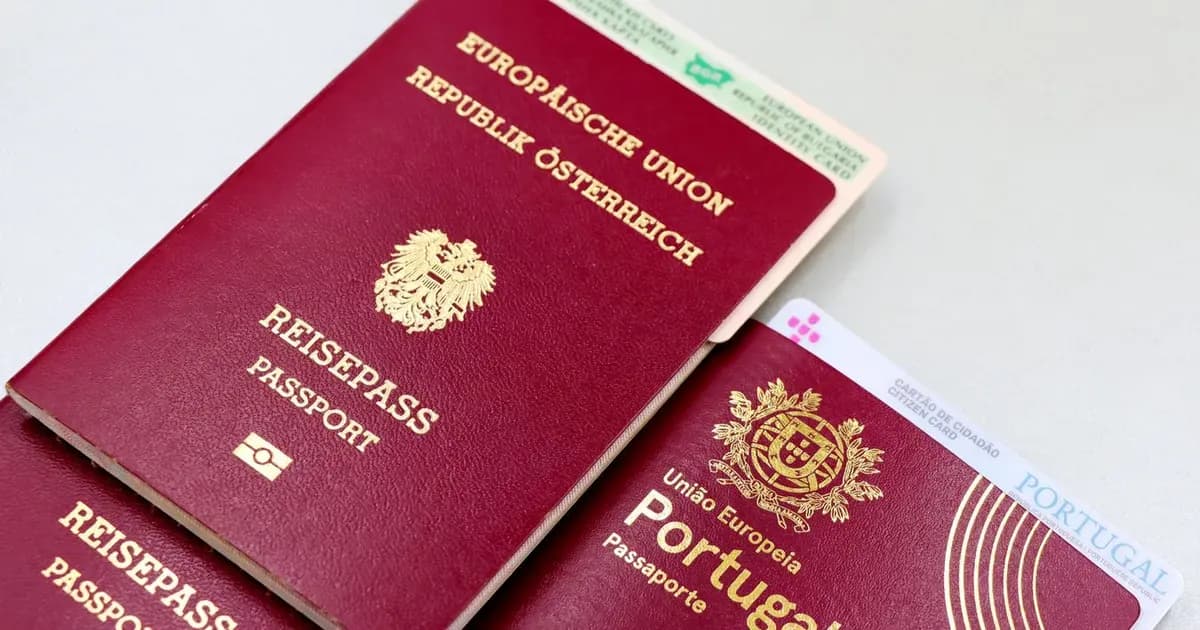
Registering Your Move Before You Have Permanent Housing
Folkbokföring can start from a hotel or hostel address, provided you can show intent to live there, and it is what produces a personnummer, not the reverse. Skatteverket's guidance for people moving to Sweden, "Flytta till Sverige," confirms that first-time registration in the population register issues a personnummer at that point. The registration accepts a temporary address, including a hotel or hostel, while you search for permanent housing.
Everyone moving to Sweden and planning to stay for at least one year must complete this registration in person at a Skatteverket service office. Staff there verify your identity against your passport or national ID card before processing the move notification. You do not need a signed lease before this appointment. What you need is an address you can plausibly occupy and, depending on your situation, the permit route that sets your folkbokföring timeline already cleared. Once Skatteverket approves the registration, it assigns your personnummer, and that number then opens the doors the contract itself never required.

Why the First-Hand Public Queue Is Closed
Bostadsförmedlingen Stockholm requires a personnummer or samordningsnummer at registration, which rules out the public queue for most new arrivals who have not yet been folkbokförd. Registration carries an annual queue fee set by Bostadsförmedlingen Stockholm, applies from age 18, and queue time only begins accruing from the date you register, not from the date you arrived in Sweden or started searching.
Current wait times make the scale of that gate clear. According to bostad.stockholm.se's year-end statistics for 2025, "Summering av året 2025", the citywide average wait for an ordinary rental apartment was 9.0 years across all areas. That figure climbs to 12.4 years for Stockholm municipality specifically and to 21 years in inner Stockholm, while newly built apartments averaged 5.8 years. A handful of municipalities, including Södertälje, Sigtuna, Salem, Österåker, Tyresö, Upplands-Bro, and Sollentuna, delivered apartments in under five years across 2025. The same report counted 894,592 people registered in the queue as of 31 December 2025 and 20,861 apartments allocated during the year.

| Area | Average queue wait, year-end 2025 |
|---|---|
| Fastest municipalities (Södertälje, Sigtuna, Salem, Österåker, Tyresö, Upplands-Bro, Sollentuna) | Under 5 years |
| Newly built apartments | 5.8 years |
| Citywide average (all areas) | 9.0 years |
| Stockholm municipality | 12.4 years |
| Inner Stockholm | 21 years |
For most people who need housing within their first year in Sweden, the public queue is a long-term plan to register early, not a near-term source of an apartment. A private second-hand contract, arranged through the housing pillar covering the full search process, remains the realistic route while the queue accrues in the background.
The Legal Framework for a Second-Hand Contract
A second-hand tenancy of a rental apartment (hyresrätt) is legal only with written permission from the landlord or from Hyresnämnden, a written contract between the parties, and rent capped at the primary tenant's own cost. Hyresgästföreningen's guide to subletting, "Hyra en lägenhet i andra hand," sets these three conditions as the baseline for any lawful arrangement, regardless of whether either party holds a Swedish identity number.
The rent cap has a specific structure. For an unfurnished apartment, the rent charged to the subtenant must not exceed what the primary tenant themselves pays. For a furnished sublet, Hyresgästföreningen allows a surcharge of up to 15 percent above that base rent to cover furniture and utilities, but nothing beyond it. That cap applies to sublets of a hyresrätt. Renting a privately owned home, such as a bostadsrätt apartment or a house, runs under different rules: for contracts from 1 July 2026, the new Privatuthyrningslag (2026:772) replaces the old cost-based rent model, and Hyresnämnden can change the rent if it is substantially higher ("väsentligt högre") than what is generally charged for other private rentals, per Domstolsverket. Contracts signed before 1 July 2026 stay under the 2012 law. For a hyresrätt sublet, notice periods follow a separate rule. An open-ended second-hand contract carries a three-calendar-month notice period for either party. A fixed-term contract of under nine months terminates automatically at the end of its stated term, with no notice required from either side. A written contract that states the rent, the term, and the permission behind it protects both parties if a dispute reaches Hyresnämnden later.
Strengthening an Application Without a Personnummer
Landlords weigh proof of income and a co-signing employer more heavily when a personnummer is missing from an application. The Local's renting guide identifies an employer co-signature as one of the strongest available substitutes. When an employer vouches for a tenant's income and standing, it gives the landlord a recognisable point of contact. That is a form of financial accountability that a passport alone does not provide.
Beyond a co-signature, a strong application without a personnummer usually includes a signed employment contract, recent payslips or an offer letter stating salary, and references from a previous landlord if one exists outside Sweden. Some rental platforms allow browsing and initial contact without requiring a personnummer at all, reserving it only for the final contract stage. Budgeting for a second-hand contract also means accounting for what a second-hand contract adds to first-month costs, since deposits, first-month rent, and any furniture surcharge typically fall due before you move in.
Spotting an Illegal Subletting Arrangement
Subletting without the landlord's or Hyresnämnden's permission is a criminal offence when unreasonable rent is charged, and it also puts the primary tenant's own contract at risk. Hyresgästföreningen's guide explains that a change to Swedish rental law took effect on 1 October 2019. It criminalised the charging of unreasonable rent in unauthorised second-hand arrangements and gave Hyresnämnden clearer grounds to act against both the practice and the landlord who allows it.
Overcharging in the second-hand market is measurable, not anecdotal. A 2022 report from Stockholms Handelskammare, "Den låsta dörren till hyresmarknaden," found that second-hand rents in Stockholm County ran roughly double, about 200 percent, of first-hand rents, and 149 percent higher in Stockholm City specifically. A subtenant paying close to double the first-hand rent, without a written contract or documented permission, is a strong sign the arrangement sits outside the law. If you suspect this is happening to you, see how to dispute an illegal subletting arrangement for the steps to raise it with Hyresnämnden.
What Changes Once You Have a Personnummer or Samordningsnummer
A personnummer unlocks BankID directly, while a samordningsnummer only unlocks Freja eID+, and only under narrower conditions. Skatteverket confirms that BankID requires both a personnummer and bank customer status, meaning a bank must have already verified your identity and opened an account in your name before it can issue BankID credentials. A samordningsnummer, the coordination number Skatteverket assigns to people who need to interact with Swedish authorities without full folkbokföring, does not meet this bar on its own.
Freja eID+ sits at a different threshold. Skatteverket states that Freja+ is available to people holding either a personnummer or a samordningsnummer, but only at a confirmed or verified identity level. That level requires an in-person identity check beyond simply having the number assigned. A samordningsnummer application takes up to 10 weeks to process and, once issued, remains valid for five years. For most newcomers renting a second-hand apartment while waiting on full registration, this means Freja eID+ can become usable well before BankID does, and planning around that gap is worth doing early.
Reader questions
Do you need a personnummer to sign a rental contract in Sweden?
No. Hyresgästföreningen's subletting rules do not list a personnummer as a requirement for a private second-hand contract. It is Bostadsförmedlingen's public queue and BankID, not the contract itself, that require one.
Can you register a move with Skatteverket before you have permanent housing?
Yes. A hotel or hostel address is accepted on the move notification if you can show intent to live there, per Skatteverket's guidance for people moving to Sweden. Registration itself is what issues your personnummer, so you do not need a signed lease before this appointment.
Does a samordningsnummer give you BankID?
No. BankID requires a personnummer and bank customer status. A samordningsnummer only opens Freja eID+, and only at a confirmed or verified identity level, per Skatteverket. Processing a samordningsnummer application takes up to 10 weeks, and the number remains valid for five years.
A Rental Contract in Sweden Needs No Personnummer, but BankID Still Does
The contract itself needs no personnummer — Hyresgästföreningen's subletting rules never list one as a condition. Folkbokföring needs an address you can show intent to live at, not a permanent lease already signed. The actual gates sit downstream: Bostadsförmedlingen's public queue and BankID, both of which require a personnummer or, for a narrower set of services, a samordningsnummer. Once you understand which document unlocks which step, the sequence stops looking like a single locked door and starts looking like what it is, three separate checkpoints, each with its own rule. For the appointment that starts the whole sequence, see the personnummer, ID and BankID guide.
About the author: Keerthi Murugesan writes Sweden Unpacked's guides on navigating Swedish administrative systems, from residence permits to housing and tenancy disputes.
Next step
Sweden's andrahandskontrakt: what it must include, and the rent cap that applies from 1 July 2026Checked
Sources
- The Local, Accommodation 101: How to rent an apartment in Sweden — retrieved 1 September 2026
- Skatteverket, Flytta till Sverige — retrieved 1 September 2026
- Bostadsförmedlingen Stockholm, Registrera dig — retrieved 1 September 2026
- Bostadsförmedlingen Stockholm, Summering av året 2025 — retrieved 1 September 2026
- Hyresgästföreningen, Hyra en lägenhet i andra hand — retrieved 1 September 2026
- Skatteverket, Samordningsnummer — retrieved 1 September 2026
- Stockholms Handelskammare, Den låsta dörren till hyresmarknaden — retrieved 1 September 2026
- Domstolsverket, Nya regler för hyra och bostadsrätt sommaren 2026 — retrieved 29 September 2026
- Riksdagen, Privatuthyrningslag (2026:772) — retrieved 29 September 2026