Train vs. Rental Car for a Week in Sweden: The Real Cost (August 2026)
A week of SJ train travel priced against a week of car rental in Sweden, with fuel, congestion tax and bridge tolls added in, sourced and dated August 2026.
The information here is for general informational purposes only and does not constitute legal, financial, or tax advice. Always consult a qualified professional for your specific situation.
A week of SJ train tickets and a week of car rental rarely get compared on the same basis. SJ is Sweden's state-owned rail operator and runs the country's main intercity network. Rental sites quote a day-rate and stop. Train-fare examples quote one route on one day. Neither adds fuel. Neither adds Stockholm's congestion tax. And neither accounts for SJ pricing a ticket more like an airline seat than a fixed fare.
This piece puts both totals together, category by category, each figure dated and sourced, then ends with a decision rule tied to the shape of the itinerary rather than to price alone.
Sweden's national rental headline starts from about $33 a day, but the number that actually applies depends on city and month.
discovercars.com's aggregated rate data (retrieved August 2026) lists Sweden-wide rentals from about $33 a day at the cheapest end of the market. City-level averages sit well above that floor and swing with the season. In Stockholm, the site's own monthly averages run from roughly $40 a day in September, the cheapest month it tracks, up to roughly $75 in July, the priciest (discovercars.com/sweden/stockholm). Gothenburg shows a similar spread: roughly $50 a day in March against roughly $85 in November (discovercars.com/sweden/gothenburg). These are one booking site's aggregated averages rather than a market-wide rate, and they move with the season and the fleet.
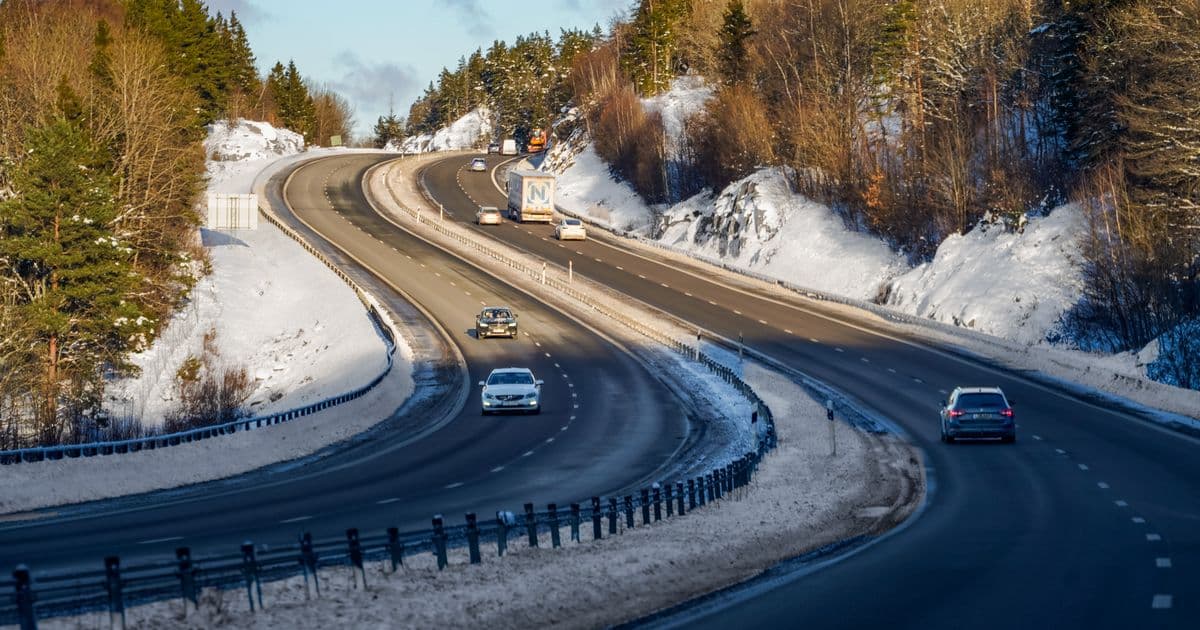
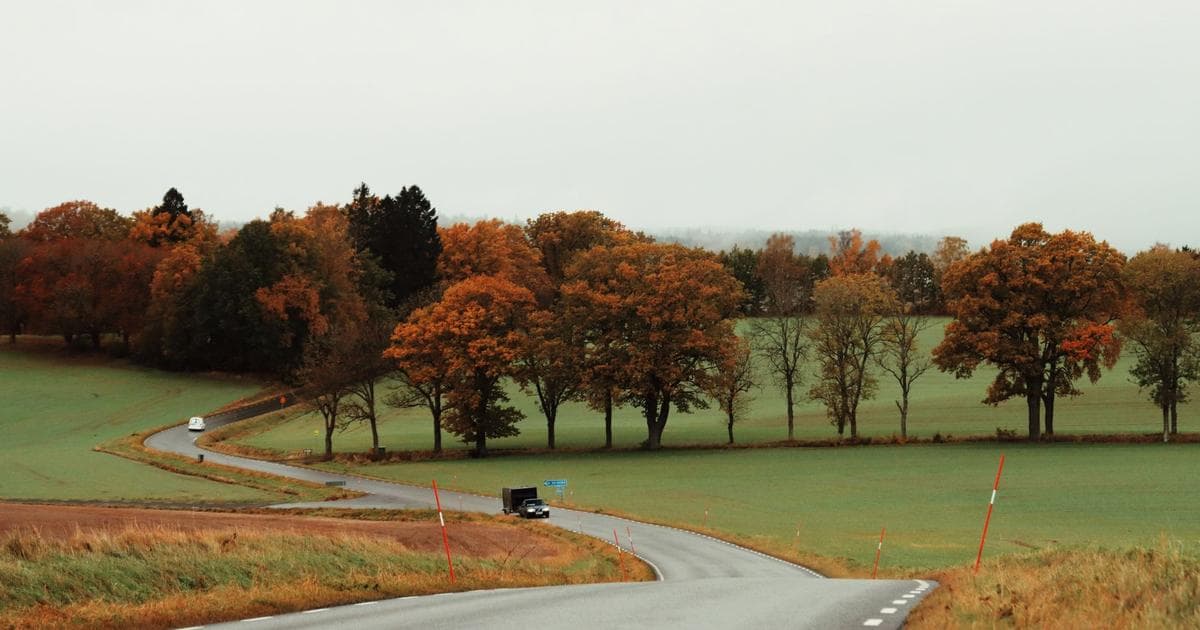
A self-drive itinerary in Sweden spends most of its week on roads like this one between towns, not inside a single city.
Two things follow from that range. First, an August trip sits closer to the July peak than to the September or March lows in both cities. The day-rate a traveler actually pays this month runs above the $33 headline. Second, city matters as much as month: the same week costs differently depending on whether the car is picked up in Stockholm or Gothenburg. Neither adjustment shows up in the single "from $33/day" figure that most comparison sites lead with.
What a Week of SJ Train Travel Costs
SJ has no domestic weekly pass, so a week of train travel in Sweden is priced leg by leg, and each leg gets more expensive the closer it's booked to departure.
That's a structural difference from rail systems that sell a flat weekly or regional pass. On SJ, every journey is its own transaction, priced dynamically the way an airline prices a seat: cheap far out, progressively more expensive as the departure date closes in. Omio's listings for the Stockholm–Gothenburg route (retrieved August 2026) show fares from about $8 (€7) when booked well ahead, against $19–$22 for the same route bought close to departure. The lowest fares tend to surface roughly three months ahead of travel, when SJ opens sales on a departure.
Every SJ leg is its own fare; a week's itinerary means booking and pricing each journey separately.
The practical effect: a week that covers three or four train legs can land anywhere from roughly $30 to well over $80 in fares alone, depending entirely on how far ahead each leg was booked — the same route, the same week, a very different total. seat61.com's route guide confirms the absence of a domestic weekly product on SJ, which is the detail most single-fare comparisons skip before quoting "the cost of the train."
Fuel Adds to the Rental Total
Pump prices in Sweden run roughly 15 to 17 SEK a litre for petrol and roughly 16 to 20 SEK a litre for diesel — both real additions to a week of driving that a day-rate alone doesn't show.
No Swedish authority publishes a quotable pump price: Drivkraft Sverige, the fuel industry body that maintains the national price series, releases it as charts rather than a table, and price-comparison sites such as GlobalPetrolPrices.com publish estimates rather than a tariff (its diesel page works the same way). Prices also move week to week, and two temporary tax cuts are holding them down across the 2026 driving season. Skatteverket has cut the energy tax on both fuels — "Skatten på bensin och diesel sänks tillfälligt från den 1 maj till och med den 30 september 2026" (Skatteverket) — and cut the carbon-dioxide tax from 1 July to 30 November 2026, by 2 kronor 40 öre a litre on petrol and 2,400 SEK per cubic metre on diesel (Skatteverket). A multi-stop Sweden itinerary covers several hundred kilometers between cities and regions in a week, and those per-litre prices turn that distance into a fuel bill that a rental comparison quoting only the day-rate never surfaces.
Estimates, not a quoted price. Pump prices move week to week, and a temporary energy-tax cut (1 May–30 September 2026) and carbon-tax cut (1 July–30 November 2026) are both in force (Skatteverket). Drivkraft Sverige publishes the national price series as charts only.
Neither range is fixed for the length of a trip — pump prices move week to week, and both tax cuts expire during autumn 2026 — so a traveler budgeting a week of driving should check the price at the pump close to the travel date rather than treating either range as a locked-in number.
Congestion Tax and Bridge Tolls Add to the Rental Total
Driving into Stockholm adds up to SEK 135 a day in peak season. Gothenburg caps at SEK 60 a day. Neither applies to the SJ train.
Transportstyrelsen, Sweden's transport agency, sets Stockholm's congestion tax at up to SEK 135 a day during peak season. Peak season runs 1 March through the day before Midsummer Eve, and again from 15 August through 30 November; outside those windows the cap drops to SEK 105 a day. The tax is charged only Monday through Friday during set daytime hours, not around the clock. Gothenburg's cap sits lower, at SEK 60 a day, under the same agency's rules.
Source: Transportstyrelsen, congestion taxes in Stockholm and Gothenburg, 2026.
There's a third cost that only applies if the route crosses into Denmark: the Öresund Bridge toll. As of 18 May 2026, a standard passenger car pays 470 DKK one-way to cross (Øresundsbron). That's a one-time addition tied to a specific route choice, not a recurring daily cost like the congestion tax, so it only belongs in the total for itineraries that actually reach across the bridge.
The Full Week, Side by Side
Put the two all-in weekly totals next to each other, and the gap between "day-rate" and "week's real cost" gets clearer on both sides.
Cost category
Car rental (week)
SJ train (week)
Base cost
Day-rate × 7 — roughly $230–$510 nationally, or roughly $300–$600 in Stockholm or Gothenburg, depending on month
Sum of each leg's fare, priced separately per journey
Fuel
Added on top, at roughly 15–17 SEK/L petrol or 16–20 SEK/L diesel, scaling with distance driven
Not applicable
Congestion tax
Up to SEK 135/day in Stockholm (peak), SEK 105/day (off-peak), or SEK 60/day in Gothenburg, only on days the car enters those cities
Not applicable
Bridge tolls
470 DKK one-way at Öresund, only if the route crosses to Denmark
Not applicable
Booking flexibility
Fixed once picked up; day-rate locked at rental
Fare rises the closer to departure a leg is booked, per route
Both totals in this table are ranges, not fixed numbers. The rental range multiplies the sourced day-rates by seven without adding fuel or congestion tax. The train side has no single total at all, because SJ prices each leg independently rather than selling a week's travel as one product. The categories and their sourced per-unit costs above are accurate. But before publishing a specific all-in dollar or SEK figure for either column, recalculate both against the exact route and current per-leg SJ fares for the dates in question — a single locked total for "a week's trip" depends entirely on which cities the itinerary visits and how early the train legs were booked.
Which One to Choose
Route shape decides the answer here, not price alone.
An itinerary that stays on SJ's main corridors — Stockholm, Gothenburg, Malmö, and the intercity lines connecting them — favors the train, especially when legs are booked close to the roughly three-month advance window that tends to surface the lowest SJ fares. A rental's day-rate, fuel, and Stockholm's congestion tax can add up to more than the equivalent train fares on exactly those routes.
An itinerary that reaches smaller towns, rural regions, or multiple stops in a single day favors the car instead, even after adding fuel and congestion tax, simply because those places sit off SJ's network entirely. For those trips, a rental buys flexibility that no train ticket, however cheap, can substitute for.
Frequently Asked Questions
Is it cheaper to rent a car or take the train in Sweden?
It depends on the route and the booking window. SJ fares booked early can undercut a week's rental on corridor routes, but fares bought close to departure can cost more per leg than a share of the rental (Omio; discovercars.com).
Does Sweden have a weekly train pass?
No. SJ sells no domestic weekly pass — each journey is booked and priced separately (Omio; seat61.com).
How much does congestion tax add to a week of driving in Stockholm?
Up to SEK 135 a day in peak season, SEK 105 a day off-peak, charged only Monday through Friday during set hours (Transportstyrelsen).
What does it cost to cross the Öresund Bridge by car?
470 DKK one-way for a standard passenger car, as of 18 May 2026 (Øresundsbron).
The Route Decides the Cost, Not the Day-Rate
A week's SJ tickets and a week's car rental both cost more than their headline figures suggest — the train because Sweden sells no weekly pass and rewards only early booking, the car because fuel and congestion tax sit outside the quoted day-rate. Neither omission is an accident; it's just what each industry's standard price quote leaves out.
The decision rule holds regardless of exactly which totals a specific week produces: stay on SJ's main corridors and the train usually wins, especially booked early. Reach beyond them — smaller towns, rural stops, multiple destinations in a day — and the car earns its fuel and congestion-tax cost through flexibility the train can't offer. For the season and daylight trade-offs that sit alongside this choice, see how the month affects both rental rates and daylight.
About the Author
Keerthi Murugesan writes about the practical logistics of living in and traveling around Sweden for Sweden Unpacked, translating official Swedish transport and pricing sources into plain-language cost comparisons.
Sources
discovercars.com/sweden — booking site; its own aggregated national and city rental day-rates, retrieved August 2026